
Most people asking about capital gains tax selling a house in Lake City end up owing nothing, and spend a lot of energy worrying about it first. The federal home sale exclusion is generous, Florida has no state income tax, and the majority of ordinary sales here fall well inside the lines. That said, the exceptions are real, and a few of them are common in Columbia County specifically. Here is the general shape of it, with the strong caveat that this is not tax advice and your situation deserves an actual CPA.
The Exclusion That Covers Most Sales
Under federal rules, a single filer can generally exclude up to $250,000 of gain on the sale of a primary residence, and a married couple filing jointly up to $500,000. Gain is not the sale price. It is roughly what you sold for, minus selling costs, minus your adjusted basis, which is what you paid plus qualifying improvements over the years.
Put that against local values and you can see why most sellers here never touch it. The Census Bureau’s 2024 five-year estimates put the median value of an owner-occupied home in Columbia County at $194,900. Someone who bought in 2009 and sells today may have a meaningful gain on paper and still be nowhere near a quarter million dollars of it.
The IRS explains the mechanics in Publication 523, which is more readable than its name suggests. Worth twenty minutes before you pay anybody to tell you the same thing.
The Ownership and Use Test
The exclusion generally requires that you owned the home and lived in it as your main home for at least two of the five years before the sale. The two years do not have to be continuous, and ownership and use do not have to overlap perfectly.
There are partial exclusions for people who fall short because of a work relocation, a health situation, or certain unforeseeable circumstances. That matters here more than you might think. This is a market where a job change at the distribution centers, the hospitals, or the maintenance operation out at the airport can move a household on short notice, and a partial exclusion can cover a lot of a shortened stay.
You also generally cannot use the exclusion if you already used it on another home sale within the past two years. People who have moved twice in quick succession get caught by this one, and it is worth checking before you plan around a number.
Inherited Property Works Very Differently
This is the most reassuring rule in the whole area, and the one heirs most often do not know. When you inherit a house, the tax basis generally resets to its fair market value as of the date of death rather than what the deceased originally paid. That is the stepped-up basis.
The practical effect around here is substantial. A house bought in Watertown or Columbia City in 1979 for $32,000, held for decades, does not generally hand the heirs forty-plus years of accumulated gain. If the estate sells reasonably soon after the death, the taxable gain is frequently small or nothing, because the sale price and the stepped-up basis are close together.
It also means the tax question should rarely be what drives an estate’s timeline. Lake City Home Buyers has watched families sit on a house for a year over a tax worry that turned out not to apply, paying insurance, taxes, and utilities the whole time. Get a real answer early, then decide. How title was held, whether a trust was involved, and whether the property was ever a rental all change this.
Rentals and Investment Property Are Their Own Thing
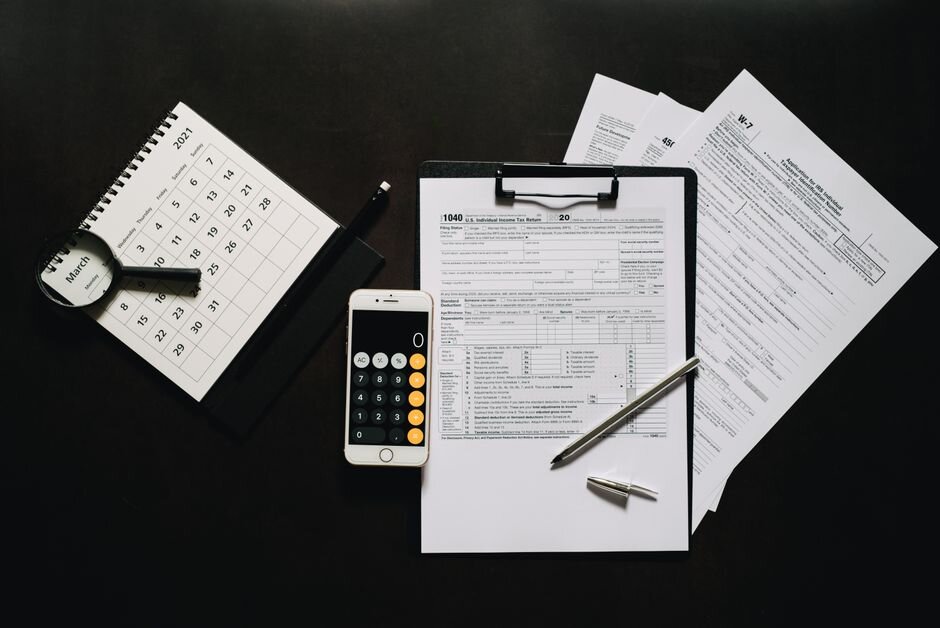
The primary residence exclusion does not apply to a property you rented out and never lived in. Gain on an investment property is generally taxable, and on top of that there is depreciation recapture: the depreciation you took, or were entitled to take, during the rental years typically gets taxed when you sell, often at a higher rate than the capital gain itself.
That recapture surprises people constantly, especially small landlords who inherited a house, rented it for eight years because it seemed easier than selling, and now discover the exit has a cost attached. A 1031 exchange can defer it if you are rolling into another investment property, but it has strict timelines and requires a qualified intermediary lined up before closing, not after.
Mixed situations, a house that was your home and then a rental, or the reverse, get complicated fast. This is squarely CPA territory and not a place to reason from a website.
What Florida Does and Does Not Tax
Florida has no state personal income tax, so there is no separate state capital gains tax on a home sale. That is a genuine advantage over most of the country and it is one of the few tax facts here that is simple.
What Florida does have is documentary stamp tax on the deed, which is customarily paid by the seller in most of the state and is calculated on the sale price. It is a closing cost rather than an income tax, but it is real money and it shows up on the settlement statement whether you expected it or not.
The Florida Department of Revenue administers it. Property taxes are a separate matter entirely and do not follow the sale, though they are prorated at closing. Worth remembering that the rate depends on which side of the city line you are on: 13.4997 mills in the unincorporated county against 19.2003 inside Lake City limits at 2024 certified rates.
Records Are the Cheapest Way to Reduce the Bill
Your basis is not just the purchase price. Qualifying capital improvements add to it, and every dollar of basis is a dollar of gain you do not have. A new roof, an HVAC system, an addition, a well or septic replacement, impact windows, a permitted garage conversion. Routine repairs generally do not count, improvements generally do, and the line between them is exactly the kind of thing a CPA earns their fee on.
The catch is documentation. Nobody keeps receipts for a 2011 roof. If you are anywhere near the exclusion limits, dig through the files, call the contractor if they are still in business, and pull permit records from the county or city depending on which has jurisdiction over your parcel. It is tedious and it is the highest-return tedious work available.
Josiah spent eleven years as a licensed realtor before he started buying houses directly, and the sellers who did best at tax time were never the ones with the cleverest strategy. They were the ones with a folder.
Questions we get
Where do people go wrong locally?
Three patterns come up repeatedly when capital gains tax selling a house in Lake City turns into a real problem. Assuming an inherited house carries a huge tax bill, when the stepped-up basis usually prevents that. Assuming a long-held rental is tax-free because “it’s my house,” when recapture says otherwise. And treating a manufactured home sale as automatically simple, when whether it was titled personal property or converted to real property changes the analysis.
The fourth is subtler: delaying a sale purely for tax reasons without pricing the delay. Carrying a vacant house through a Florida summer costs real money, and insurance in this county has not gotten cheaper. If waiting six months saves you less than carrying the house for six months costs, waiting is a loss dressed up as a strategy.
None of that is a reason to rush. It is a reason to get the actual number rather than operating on a guess in either direction.
Do I really need a CPA for this?
Everything above is the general shape of capital gains tax selling a house in Lake City, and general shapes have exceptions that matter enormously to individual sellers. Filing status, how title was held, trusts, prior exclusions, rental history, depreciation, whether a spouse has died. Every one of those can move the answer.
A short conversation with a CPA about your specific circumstances costs a fraction of what guessing wrong costs, and most will tell you in twenty minutes whether you have anything to worry about. The IRS topic page on the sale of your home is a decent primer to read first so the conversation goes faster.
When You Are Ready to Sell
Lake City Home Buyers does not give tax advice and will not pretend to. What we can do is give you a firm number and a firm closing date, which is often exactly what a CPA needs in order to tell you anything useful about the tax side.
If this is an inherited property, our walkthrough of selling an inherited house here covers the probate side that usually has to be sorted before any of this becomes relevant. Otherwise, get a number and take it to your accountant before you decide anything.